

How to Pack Fragile Items for a London Move Safely
A London move can feel fast and stressful, especially if you live in a flat with stairs, a small lift, or a short parking window. So, you need a simple packing system that protects fragile items from the first carry to the final unload. In this guide, you’ll learn how to pack fragile items for a London move with clear steps, quick checks, and a safe man and van loading order.
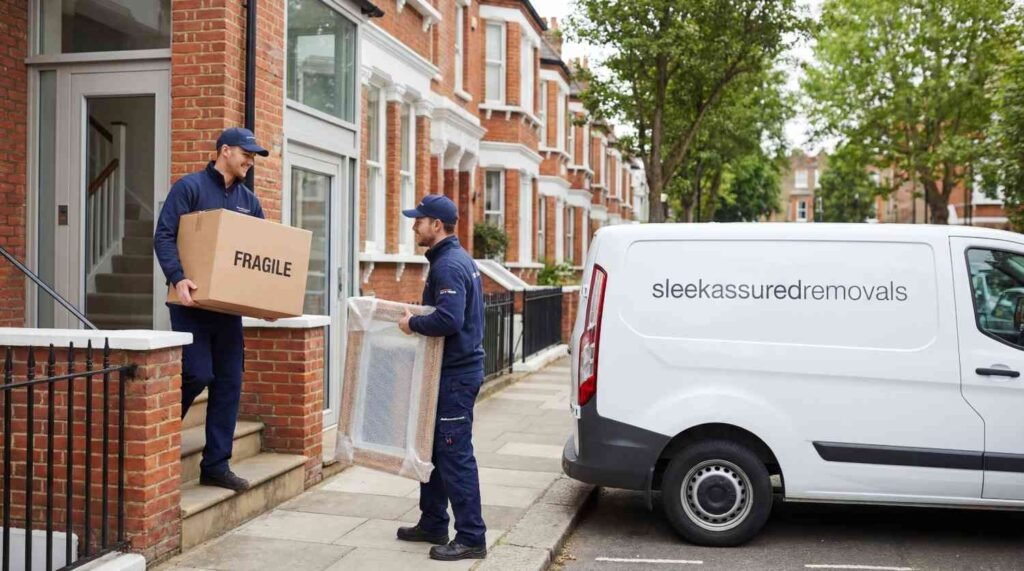
Worried about broken glassware, cracked plates, or a scratched TV screen? You’re not alone, and the good news is you can prevent most damage with the right box size, the right padding, and the no-rattle test. We support London movers at sleekassuredremovals, so we built this guide to be easy to follow, even when you’re under time pressure.
Key Takeaways
- Use small, strong boxes for breakables, so the boxes stay steady on stairs
- Wrap each item fully, then fill gaps until the box stays silent
- Run the no-rattle test on every box before you tape it shut
- Label boxes with room, number, FRAGILE, UP arrows, and DO NOT STACK
- Load fragile boxes last in the man and van, and keep them upright
- Plan for flats, lifts, and short parking windows across London
- Pack a first-night fragile box, so you unpack without panic
What Fragile Packing Means for a London Move
Fragile packing has one goal: stop movement inside the box. If items knock into each other, chips and cracks happen quickly. So, wrap each item fully, add a padded base layer, and fill every gap until the box stays silent.
London move day adds extra pressure, especially in flats. You may carry boxes downstairs, wait for a small lift, or load fast on a busy street with limited parking. So, small, strong boxes, clear labels, and a safe loading order matter more than fancy supplies—this is the same approach we use at sleekassuredremovals to reduce damage during local moves.
Why Fragile Items Break & How to Prevent Damage
Fragile items usually break because boxes move, gaps stay empty, and loading gets rushed. In London flats, stairs, small lifts, and tight parking can add extra pressure, so a simple plan matters.
Why fragile items break in London moves
Most breakages happen for three reasons: boxes feel strong but stay too big, gaps let items shift, and heavy items end up on top during a quick load. Flat moves increase the risk because tight stair turns and lift delays make people rush. So, even a short drive across London can damage items if a box rattles.
Quick ways to protect fragile boxes
Small boxes keep weight manageable and reduce movement inside the box, so items travel without knocking into each other. Use this quick rule: if it makes noise, add padding. Then label boxes with the room and handling notes, and load fragile boxes last, upright, and away from heavy furniture, so unloading stays safe and quick.
Step-by-Step Guide to Pack Fragile Items Safely
This is the fastest safe method to pack fragile items for a London move. Follow these steps in order, and check each box before you seal it.
Step 1 — Set up your packing station
Choose one clear spot near the door, then keep supplies within reach for quick packing in a London flat. Use small/medium strong boxes, packing paper or bubble wrap, tape, marker, FRAGILE labels, soft padding, and dividers. Keep a bin bag nearby so the space stays clean and safe.
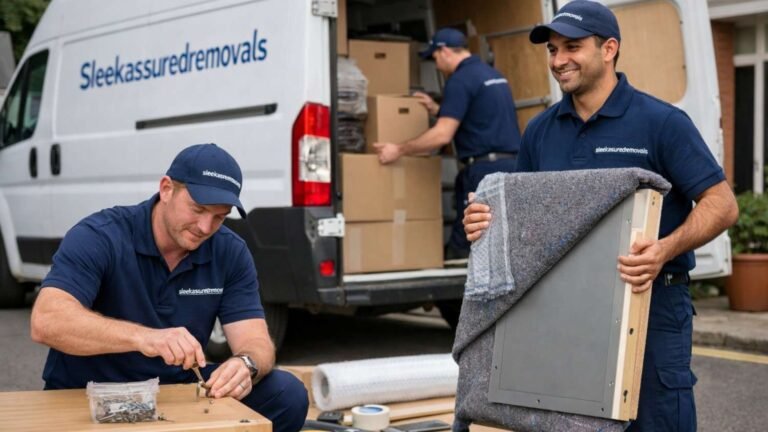
Step 2 — Wrap, cushion, and lock items in place
Pad the bottom of the box first, then wrap each item fully and protect corners, handles, and thin edges. Use towels or clothing as budget padding, and use cardboard strips to separate items like glasses and plates. Avoid newspapers on light items to prevent ink marks.
Step 3 — Do the no-rattle test and seal correctly

Fill every gap until nothing moves, then close the flaps and shake the box gently. If you hear any sound, add more padding and test again. Seal with the H-tape method (centre seam plus both edge seams), then write the room name and handling notes on the top.
Quick Start: Pack Fragile Items in 10 Minutes
Short on time? Use this quick plan to pack fragile items for a London move, then keep going box by box.
10-minute plan
- Set up one packing spot with tape, a marker, and padding.
- Build 2–3 small boxes and label them by room.
- Pack the most fragile items first (glasses, plates, frames).
- Do the no-rattle test on each box.
- Pack one first-night fragile box for easy unpacking.
Golden rules
- Use small boxes and pad all sides.
- Fill gaps until the box stays silent.
- Keep heavy items out of fragile boxes.
- Label clearly and load fragile boxes last, upright.
Packing Supplies Checklist (Budget + Eco Options)
You don’t need expensive supplies. You just need the right basics, plus a few smart swaps if you want to save money.
| Packing need | Best option | Budget + eco swap | Quick note |
| Wrapping | Packing paper | Clean towels / T-shirts | Skip the newspaper on white items |
| Cushion gaps | Bubble wrap/foam | Crumpled paper / soft clothing | Fill all gaps |
| Strong boxes | Double-wall boxes | New single-wall boxes | Avoid old soft boxes |
| Separators | Box dividers | Cardboard strips | Great for glasses/bottles |
| Protection | Moving blankets | Thick duvets | Use between boxes/furniture |
| Labels | FRAGILE stickers | Marker + coloured tape | Add UP + DO NOT STACK |
Choose Box Size, Safe Weight, & No-Rattle Test
The right box matters. Weak boxes bend and tear, so your fragile items stay at risk. Pick boxes with strong walls, clean corners, and a firm base.
Quick checks:
- Press the side wall—it should feel solid.
- Check the bottom for sag before you pack.
- Tape the bottom seams first.
Then do the no-rattle test on every fragile box. A quick shake should sound silent—if you hear movement, add more padding.
Room-by-Room Packing Plan for London Flats
London flats often have limited space, so pack one room at a time. Finish one area, stack the boxes neatly, then move to the next room.
Simple packing order:

- Living room (frames, décor, lamps)
- Kitchen (glassware, plates, small appliances)
- Bedroom (small valuables, toiletries)
- Home office (monitors, cables, equipment)
Pack Glassware, Bottles & Ceramics Safely
Glass breaks when pieces knock together, so wrap each item and keep space between them.
Glassware
- Stuff inside with paper, then wrap fully.
- Stand glasses upright in a divider if possible.
- Fill gaps so nothing shifts.
Bottles and vases
- Add extra padding on the neck and base.
- Keep them upright and label THIS SIDE UP.
- Place padding between rows.
For ceramics, protect handles and thin edges with extra wrap.
How to Pack Plates, Bowls, and Kitchen Sets
Plates break less when you pack them on edge, not flat.
Plates and dishes
- Wrap each plate and bundle 3–4 together.
- Stand them upright in a small box.
- Pad both sides so the stack can’t move.
Bowls
- Nest with padding between each bowl.
- Add extra wrap-around rims.
Pack one small box with day-one kitchen basics, so you don’t open everything at once.
Pack Mirrors, Artwork, and Picture Frames Safely
Frames get damaged at the corners first, so protect the corners before anything else.
Frames and mirrors
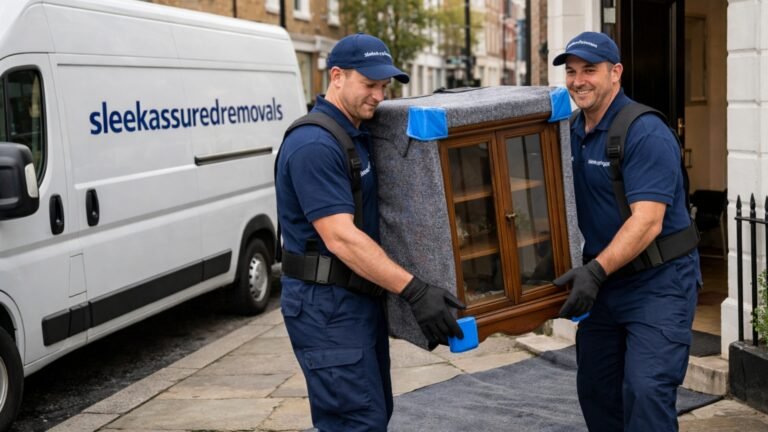
- Put cardboard on both sides.
- Wrap with bubble wrap or a thick blanket layer.
- Add folded cardboard corners as guards.
- Keep upright and mark UP arrows.
Pack TVs, Monitors, and Electronics for Moving
Screens get damaged from bumps and pressure, so protect the screen first and keep the parts together.
TV and monitors

- Use the original box if you have it.
- If not, cover the screen with a soft cloth, then add bubble wrap.
- Pad the corners well.
- Bag the stand, screws, and cables, label the bag, and tape it to the box.
Pack Lamps, Ornaments, and Small Valuables Safely
Small breakables need gentle packing and the right box size, so separate parts and pad well.
Lamps
- Remove the bulb and pack it in a padded box.
- Wrap the base and box it snugly with firm padding.
- Pack lampshades in a bigger box with light padding to keep their shape.
Ornaments and small valuables
- Wrap each item and place it in a small box.
- Use cardboard cells for tiny pieces.
- Keep high-value items with you if you prefer.
Man and Van Loading Plan to Protect Fragile Boxes
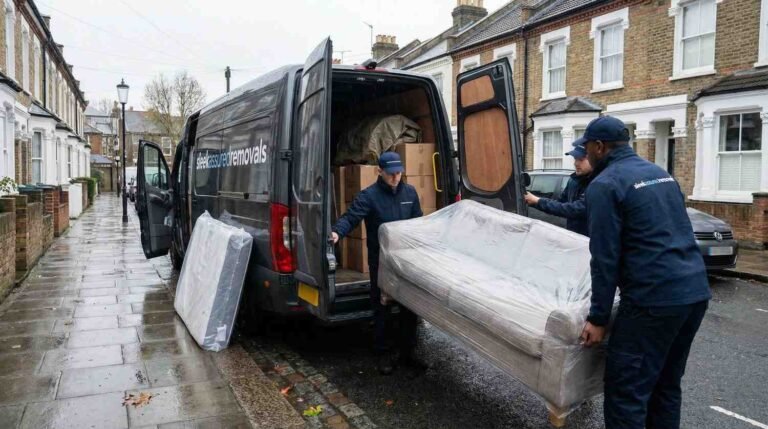
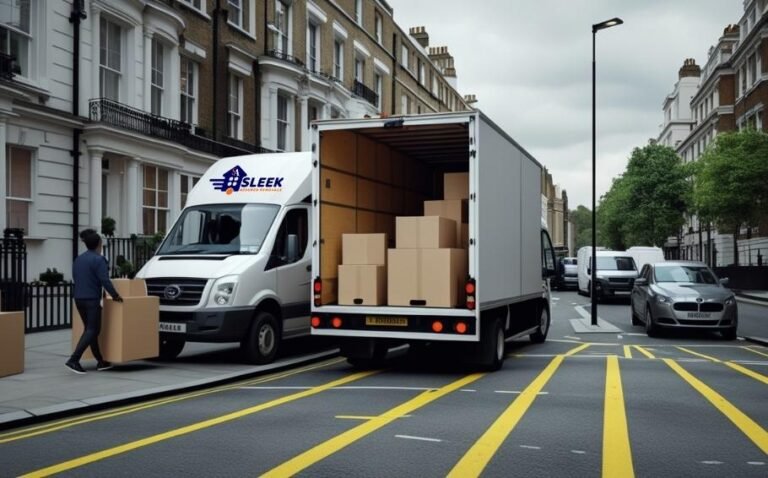
Man and van moves can load fast, so your loading order needs to protect fragile boxes from heavy items and sudden stops.
Loading order
- Heavy furniture first
- Blankets/duvets as a buffer layer
- Medium non-fragile boxes
- Fragile boxes last, upright only
Keep boxes safe
- Keep fragile boxes away from tool bags and sharp edges.
- Use blankets between furniture and boxes.
- Strap tall items, and wedge fragile boxes with soft padding so they don’t shift.
London Move-Day Tips for Flats, Lifts, & Parking
London moves often run on timing and access, so plan these details early. Check the lift rules in your building, and book a lift slot if the building asks for it. Clear stairs and landings, so every carry stays safe.
If parking looks tricky, plan a short carry route and keep fragile boxes light. Keep cardboard dry on wet days with plastic covers or bin liners. A calm plan helps you move faster, even on a busy London street.
Fragile Packing Mistakes to Avoid
Most breakages happen when people rush. So, watch out for these mistakes:
- Big boxes for fragile items: items move and knock together.
- Empty gaps in the box: gaps turn into impact space, so fill them.
- Only writing “FRAGILE”: add UP arrows and DO NOT STACK for safer handling.
First-Night Fragile Box and Safe Unpacking Tips
Pack one small box to open first after you arrive. It helps you unpack calmly and reduces drops.
First-night fragile box
- Two mugs, two plates, cutlery
- Kettle parts or tea/coffee kit
- Phone chargers + extension lead
- Scissors, tape, marker
- Hand soap + toilet roll
DIY vs Professional Packing Services in London
DIY packing works if you have time, space, and the right supplies. Professional packing helps when your move feels tight, or you have lots of breakables.
Consider help if:
- Your move date is close and you have many fragile items
- You have stairs-only access or a small lift
- You feel unsure about mirrors, artwork, or electronics
At sleekassuredremovals, we offer man and van services, house/flat/office relocation, and furniture pickup/delivery, so you can pack yourself or get support for the fragile items.

Conclusion
You can pack fragile items for a London move with less stress when you use small boxes, firm padding, and the no-rattle test. Then label boxes clearly and load fragile boxes last, so heavy items never squeeze them. A simple plan keeps you calm, even with stairs, lifts, and tight parking.
If you want support with a man and van in London, or you want help packing tricky items like TVs, mirrors, and artwork, sleekassuredremovals can guide you on the right level of service.
Frequently Asked Questions
Use small, strong boxes, and pick double-wall boxes if you can. Small boxes reduce movement and keep weight manageable for stairs and tight hallways.
Yes. Wrap items with packing paper first, then use towels, clothing, or cardboard strips to fill gaps. Run the no-rattle test before you seal the box.
Write the room name and box number, then add FRAGILE, THIS SIDE UP, and DO NOT STACK. Add coloured tape per room if you want faster sorting.
Load fragile boxes last, keep them upright, and place them on a flat base. Use blankets as buffer layers and straps to stop shifting.
Yes, if you can. Keep passports, jewellery, and irreplaceable items in a personal bag, so they stay with you at all times.


One Comment