
Antique Removals London: Safe Packing and Moving Tips
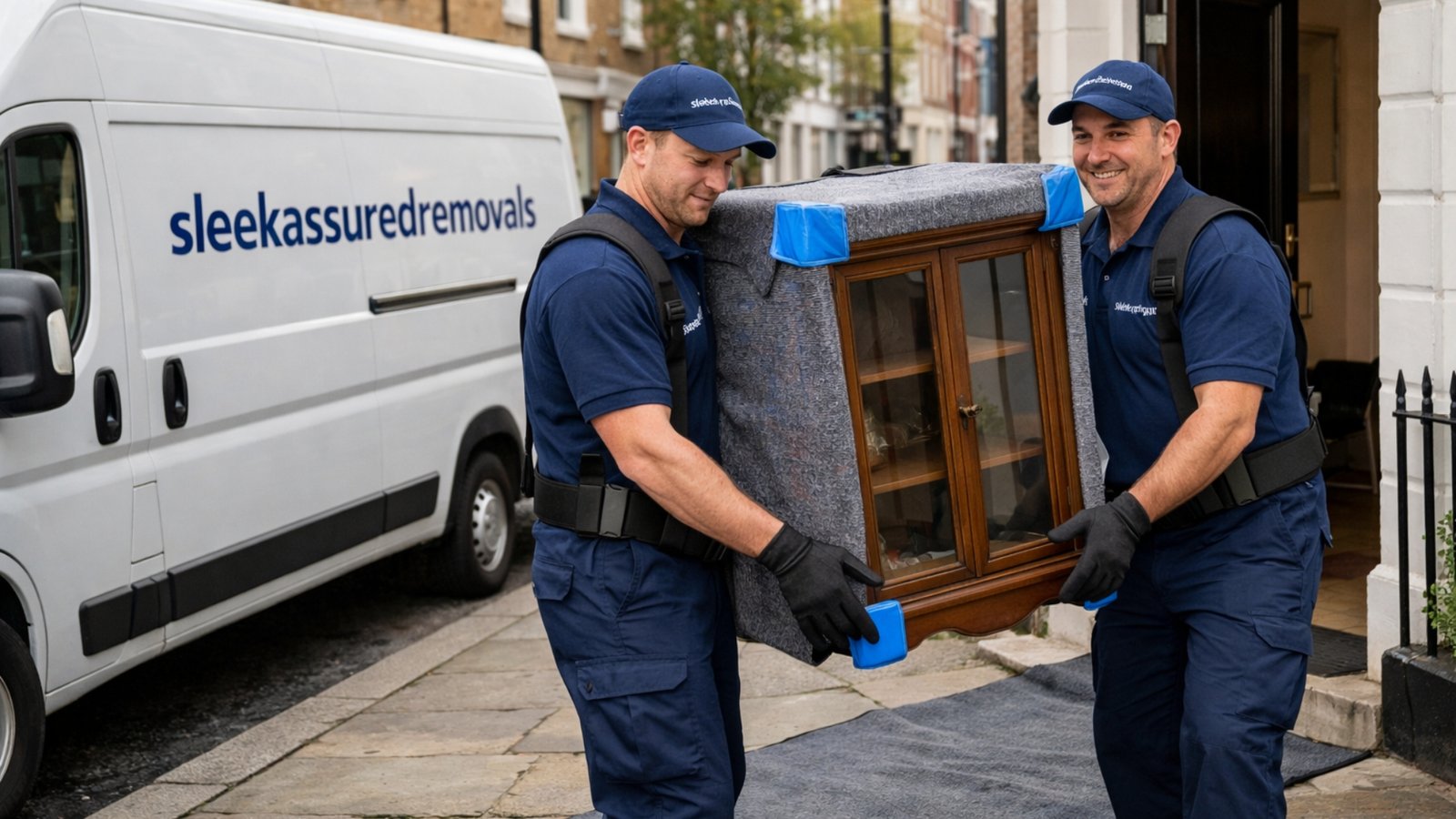
Antiques carry history, and even a small scratch can feel personal. So if you are planning antique removals London, you need more than a van and a quick lift. You need careful packing, smart London planning for stairs and parking, and a simple photo check that keeps everything clear from start to finish.
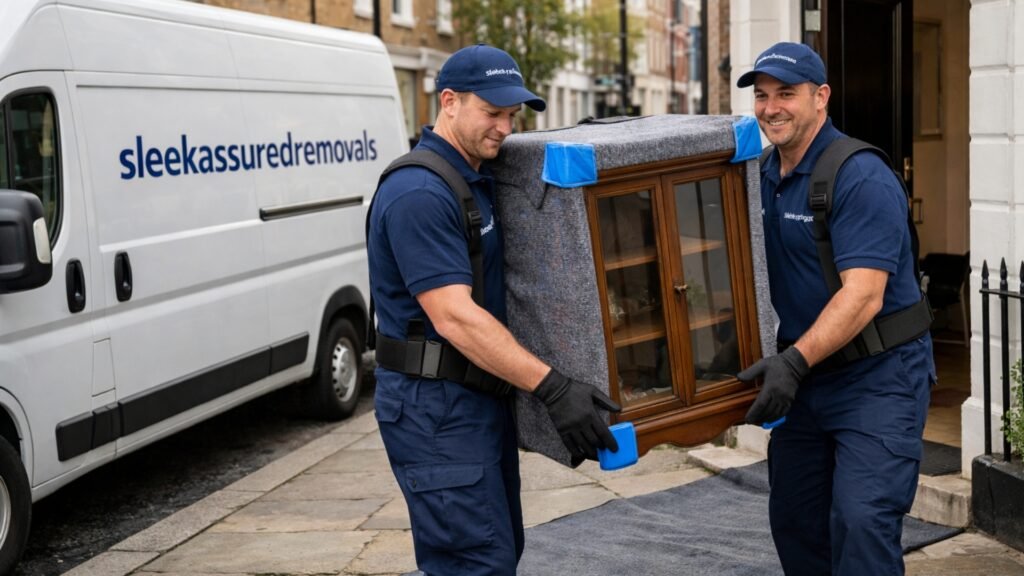
In this guide, SleekAssuredRemovals explains what a reliable antique removals service should include, what you should prepare in a London flat, and how to choose movers who treat antique furniture and fragile items with real care. Want a smoother move with fewer surprises on the day?
Key Takeaways
- Antique removals in London need careful packing, safe handling, and secure strapping in the van.
- Plan London access early: stairs, lifts, door widths, and tight corridor turns.
- Plan parking early: permits, loading bays, restrictions, and realistic time windows.
- Keep insurance simple: confirm cover, exclusions, and the exact reporting steps.
- Use a proof-first photo log before the move and after delivery.
- Ask movers to explain their process: wrap → label → strap → stable van layout.
- Share photos and access notes for an accurate quote with fewer surprises.
What is included in antique removals in London?
When people search “antique removals London,” they usually want a specialist service that protects antique furniture and fragile items from rubbing, knocks, and movement in transit. So a proper service focuses on protection, handling, securing, and planning.
A typical antique removals service includes:
- Protection: padded wrapping, furniture blankets, corner protectors, and safe layers for wood finishes
- Handling: careful lifting, safe carry routes, and controlled turns in tight spaces
- Securing: straps, tie-down points, and a stable van layout to stop shifting
- Planning: access checks for stairs and lifts, plus a parking approach for your street
- Options: single-item pickup and delivery, or full house/flat removals with packing
Why Antiques Need Specialist Movers in London
Antiques often have older joints, delicate veneers, and finishes that scratch easily. So a fast “wrap and move” approach can leave rubbing marks, loosen joints, or crack glass. You need a safer method that matches the item’s age and build.
Specialist packing lowers damage risk
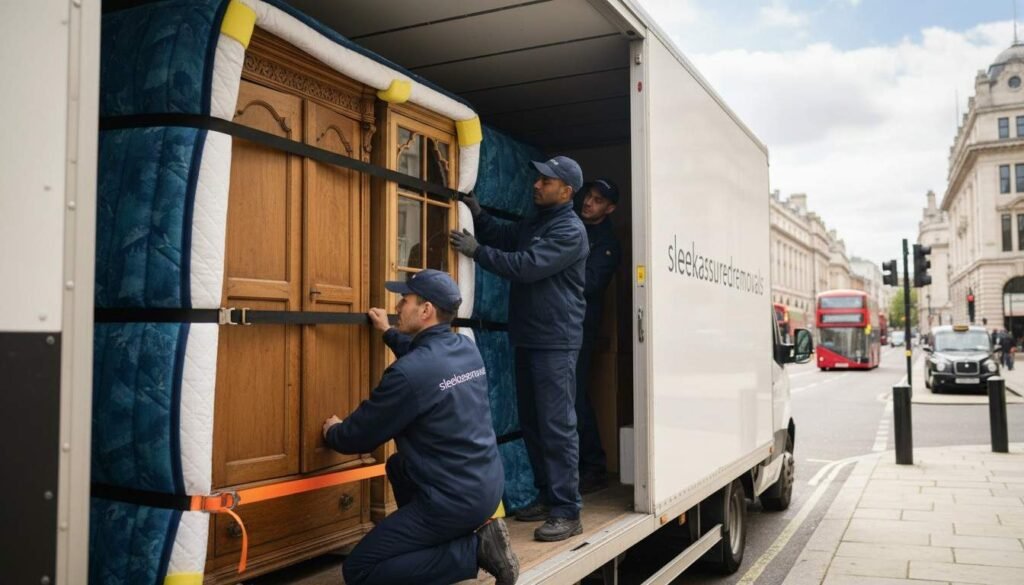
Good packing controls friction and impact. Movers use soft inner layers, padding, and corner protectors, then keep items stable in the van. This matters most for veneered wardrobes, glass-front cabinets, mirror tops, and tables with thin legs.
London planning prevents delays
London moves bring tight stairs, narrow hallways, lift bookings, and short loading windows. So a clear access and parking plan helps avoid delays, fines, and last-minute stress.
London Flat Moves: Access, Parking, and Permits
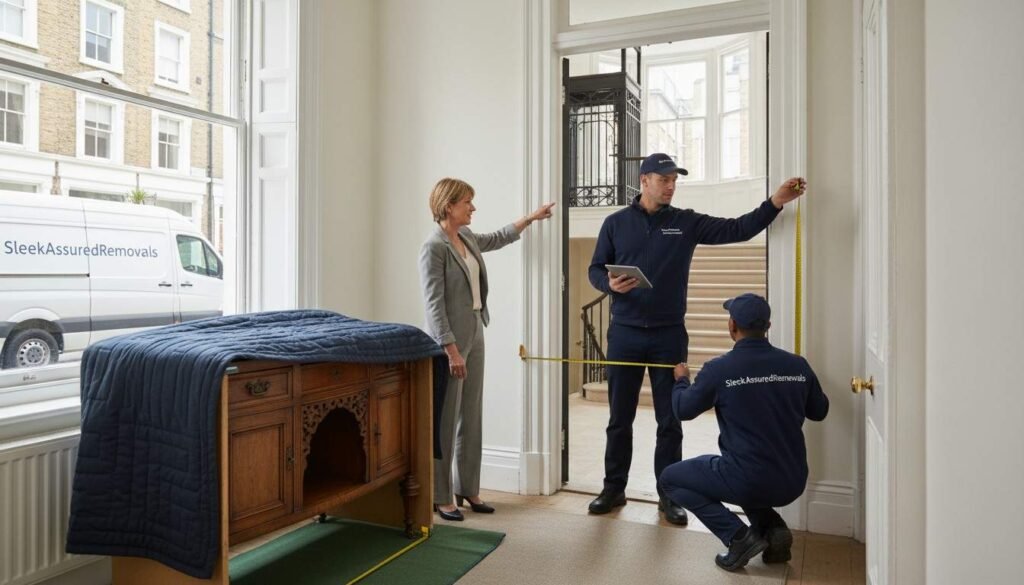
London moves more smoothly when you plan access and parking early. So before moving day, check the route from the room to the van and note anything that could slow a careful carry.
Access checks:
- Measure door widths and hallway turns
- Note tight corners, stairs, and low ceilings
- Confirm lift size, lift booking rules, and padding rules
- Check building rules like concierge hours and time slots
Parking checks:
- Look for permit bays, restrictions, and loading-only windows
- Plan around traffic and busy times in your area
- Arrange permits or a parking suspension if needed
- Set a realistic loading window based on floors and item size
Antique Moving Insurance: Cover, Exclusions, Claims
Insurance can feel confusing, so keep it simple. Ask your mover for a short written summary that explains the cover, exclusions, and claim steps.

Cover
This tells you what the policy pays for, such as damage during handling and transit. Some policies cover certain item values only, so check limits.
Exclusions
This tells you what the policy won’t pay for. Common exclusions can include pre-existing damage, poor packing done by the customer, and missing proof of steps.
Claim steps
This tells you what you must do if damage happens. Most claims need clear photos, dates, an item list, and fast reporting.
“If you can’t explain the cover in two minutes, don’t rely on it.”
Condition Report and Photo Log for Antiques
A proof-first process protects your antiques and keeps everything clear for both sides. So take a quick set of photos before the move, then check again after delivery.
Photo Log Checklist Before Moving Antiques:
- Full-item photos from the front and side
- Close-ups of corners, legs, handles, and joints
- Close-ups of glass edges and mirror corners
- Any existing marks, chips, or loose parts
Label any removable parts, then keep screws and fittings in a sealed bag with a clear label. This simple step supports insured antique removals and keeps the move organised.
How to Pack and Move Antiques Safely in London
Moving antiques works best when you follow a clear plan, not last-minute guesses. These steps help you reduce scratches and cracks, plan for London access and parking, and keep every item tracked from pickup to delivery.
Quick survey and booking for London moves
Start with a quick survey, even for one item. Share photos, measurements, and access notes (stairs, tight turns, lift rules). Book early if your building needs a lift slot or your street needs a permit plan.
Safe packing and clear labels for antiques
Pack in layers to reduce rubbing and knocks: soft inner layer, padding, then blankets. Add corner protectors, and label “fragile” and “this way up.” Keep the glass upright and keep tape away from the finished wood.
Secure loading in the van with straps and layout
Build a stable van layout, then strap items to fixed points so nothing shifts. Keep antiques away from hard edges. A well-secured load protects better than extra empty space.
Delivery checks and careful placement with photos
Check each item against your photo log after delivery. Take quick after-photos, confirm placement, and then remove wrapping carefully.
Antique Removals London Cost: What Affects Price
Pricing for antique removals London depends on time, access, and risk. So you can often predict your quote by checking a few clear factors.
| Cost driver | What it means | Why it change the price |
| Access (stairs/lift/tight turns) | Floors, narrow halls, awkward angles | Adds time and handling risk |
| Parking and permits | Permit bays, restrictions, council plans | Adds planning and waiting time |
| Packing level | Basic wrapping vs specialist packing | Changes in materials and labour |
| Item size and fragility | Glass, mirrors, veneer, loose joints | Changes the crew’s approach and secures |
| Time window | Concierge rules, booked lift slots | Limits scheduling flexibility |
| Distance in London | Traffic time across London | Increases total job time |
Common Antique Moving Mistakes in London to Avoid
Small myths can cause real damage and delays during antique furniture removals. So watch out for these common mistakes:
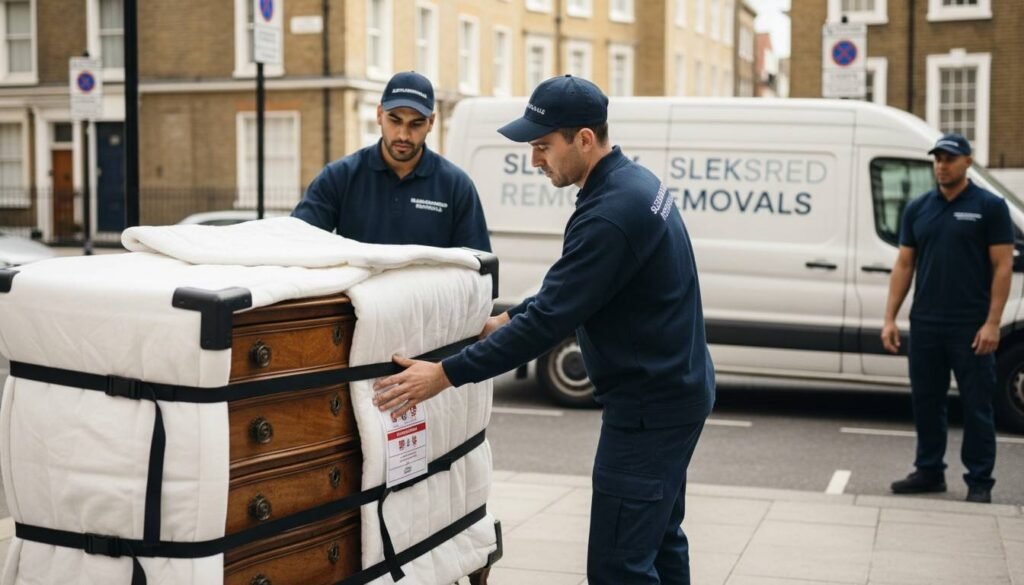
- Myth 1: “Blankets alone protect antiques”
Blankets help, but they don’t stop rubbing. Use a soft inner layer and corner protectors, too. - Myth 2: “Insurance covers everything automatically”
Insurance has limits and exclusions. Check the wording and keep your photos. - Myth 3: “Parking will be fine on the day”
London parking can block loading fast. Plan permits and time slots early.
London Antique Moves: Real Flat and Access Examples
Scenario 1: Top-floor flat, no lift
You need to move an antique wardrobe from a top-floor flat with narrow stairs. So the team plans extra time, protects floors and corners, and uses a spotter on tight turns. They carry slowly and keep the wardrobe stable to avoid knocks and rubbing.
Scenario 2: Concierge rules and short time slots
You need to move an antique glass cabinet from a building with lift bookings and strict time slots. So you confirm the slot, plan the loading bay, and keep the cabinet “ready to load” before the van arrives. The team keeps it upright, pads the edges, and straps it away from heavy items.
Get a Quote for Antique Removals in London
Antiques need careful packing, clear planning, and steady loading, especially in London. So if you follow the proof-first steps, plan access and parking early, and confirm insurance details, you can move with less stress and less risk.
If you want help with antique removals London, SleekAssuredRemovals supports house and flat removals, Man & Van moves, packing and unpacking, office removals, and pickup and delivery across London. Send a few photos, your floor level, and your parking notes, then we’ll share a clear, practical quote.
Frequently Asked Questions
Price depends on access (stairs or lift), parking needs, packing level, item size, and time window. Share photos, floor level, and parking details for a clear quote.
It means the mover offers defined cover for loss or damage during handling and transit. You usually need proof steps, like photos and a condition report. Ask for exclusions and the exact reporting steps.
Some London movers offer export-standard packing and wooden crates for high-risk items. Ask when they recommend crating, what materials they use, and how they secure crates in the van.
Yes. Share stair width, number of flights, and tight turns, then allow a realistic time window. Ask the team how they protect floors, walls, and bannisters during the carry.
Yes. Choose a team that explains protection steps, uses proper packing materials, and secures the item with straps in the van.